You should remove a tree before winter if it shows severe trunk cracking, major internal decay, a sudden lean, dead canopy branches, or root rot at the base. Winter winds, freezing temperatures, and heavy snow loads compromise structural integrity, turning unstable trees into immediate hazards for nearby roofs, power lines, and driveways. This guide covers the key signs to look for when determining whether a tree should be removed before winter arrives.
5 Signs a Tree May Need Removal Before Winter
By identifying potential hazards early, we can help you determine whether a tree needs attention before winter arrives. Here are five warning signs for tree removal before the colder weather sets in:
1. Trunk Have Deep Cracks, Cavities, or Decay
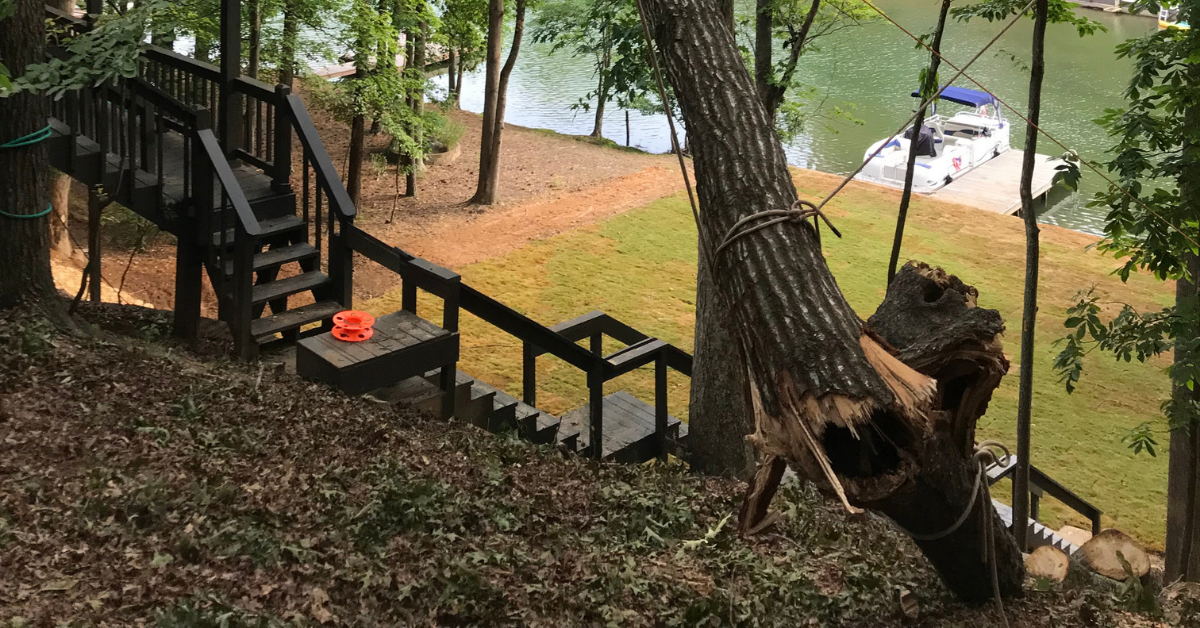
We assess large trunk cracks, cavities, and visible decay because these problems can weaken a tree’s structure. A damaged trunk may become more vulnerable to splitting or breaking under stress, particularly when the tree already has other structural defects. Although some damaged trees can remain stable, extensive decay or major cracks may indicate a need for removal.
Warning signs include:
- Deep vertical cracks or splits in the trunk.
- Large hollow areas or missing sections of wood.
- Fungal growth near the trunk or base.
- Bark separating around damaged or decaying areas.
- A split where two major stems meet.
Decay can develop inside a tree even when the outer bark looks relatively normal. Fungi that break down wood can weaken the trunk or roots over time, reducing the tree’s ability to support its own weight.
2. Large Dead or Hanging Branches in the Canopy
We recommend having large dead, broken, or hanging branches assessed before winter because snow, ice, and strong winds can place additional stress on damaged limbs. Branches above homes, vehicles, driveways, and walkways deserve particular attention. Removing hazardous limbs before severe weather can help reduce the risk of unexpected breakage.
We look for warning signs such as:
- Large branches that died during the growing season.
- Broken limbs caught in the upper canopy.
- Cracks where major branches connect to the trunk.
- Branches extending over roofs, garages, or parking areas.
- Significant dieback affecting several parts of the canopy.
A few dead branches do not necessarily mean the entire tree needs to be removed. We may recommend targeted pruning when the trunk and remaining structure are sound. However, widespread branch dieback combined with trunk decay, root damage, or poor stability may indicate a more serious problem.
Through tree trimming and tree pruning, we can remove problematic branches and address certain structural concerns. If the entire tree presents an unacceptable hazard, we can assess the situation and discuss removal.
We advise property owners to stay clear of hanging limbs and avoid cutting large branches suspended in the canopy. These branches can move or fall unexpectedly, even in calm weather.
3. Tree Started Leaning or Shifting in the Ground
We pay close attention to trees that develop a sudden lean because the change may indicate root damage or an unstable root system. When the soil around a tree begins to lift or crack, the tree may no longer be firmly anchored. These warning signs deserve attention before winter storms put additional stress on the tree.
When checking your property, look for:
- A tree that has recently started leaning in one direction.
- Raised soil or exposed roots near the trunk.
- Cracks or gaps in the ground around the base.
- A root plate that appears to be lifting on one side.
- A noticeable change in the tree’s position after a storm.
A natural lean does not automatically mean a tree is dangerous. We consider recent changes, visible root damage, and the tree’s surroundings when evaluating its condition.
If we find that a tree has become unstable, we can assess whether removal is necessary. We also consider nearby homes, driveways, and other structures when planning the work. If you notice a tree shifting near an occupied area, keep your distance and contact us rather than attempting to pull it upright or cut it down yourself.
4. Extensive Branch Dieback, Fungal Growth, Damaged Roots
We look for multiple signs of decline when assessing a tree that may no longer be structurally sound. Extensive branch dieback, fungal growth, damaged roots, and deteriorating wood can indicate underlying problems that affect the tree’s stability. When several symptoms appear together, we recommend an assessment before winter weather adds further stress.
Signs to watch for include:
- Numerous dead branches throughout the canopy.
- Premature leaf discoloration or leaf loss during the growing season.
- Fungal growth on the trunk or near the root flare.
- Areas of decaying wood or persistent wounds.
- A canopy that has become noticeably sparse over several growing seasons.
Seasonal leaf loss is normal for deciduous trees, so a bare tree in fall does not automatically indicate disease. We look at changes that occurred during the growing season and check for visible damage to the trunk, branches, and roots.
Some diseases and decay problems can weaken structural wood before the tree looks severely unhealthy.
5. Weak Structure of Trees
We give special attention to structurally weak trees near homes, garages, driveways, and frequently used outdoor areas because a failure could cause serious damage. The closer a hazardous tree is to people or property, the more important it becomes to understand where the tree or its branches could fall.
We recommend checking for:
- Large limbs extending over your roof.
- A cracked or split trunk near a building.
- Visible root damage near the base of the tree.
- A worsening lean toward your home or driveway.
- Major dead branches above areas where people regularly gather.
A tree’s location alone does not mean it must be removed. We consider its overall health, structural condition, potential failure points, and the consequences of a fall before deciding on the appropriate solution.
In North Georgia, mature trees may grow on slopes, near driveways, or close to homes. These conditions can make access and removal planning more complicated when a tree becomes hazardous.
Can We Save a Tree Instead of Removing It?
We consider alternatives to removal whenever the tree’s condition allows. Some problems can be addressed through pruning, appropriate tree care, or continued monitoring. However, when severe defects affect the trunk, roots, or overall stability, removing the tree may be the most practical solution.
Depending on what we find, possible options include:
- Tree trimming and tree pruning: We remove dead, broken, or poorly attached branches when the remaining tree is structurally sound.
- Tree health management: We assess identifiable health problems and determine whether appropriate treatment may help.
- Monitoring: We may recommend tracking changes in trees that have defects but do not currently present an unacceptable risk.
- Tree removal: We recommend removal when the tree’s condition, location, and potential for failure make keeping it unsafe or impractical.
Why Do We Recommend Addressing Hazardous Trees Before Winter?
We recommend addressing known tree hazards before winter because doing so gives us more time to assess the problem and plan the necessary work. Waiting until a storm causes a branch to break or a tree to fall can turn a manageable situation into an emergency.
Taking care of hazardous trees before winter can help you:
- Reduce the risk of falling branches and potential tree failure.
- Protect roofs, vehicles, driveways, and other property.
- Give us time to plan around access limitations and nearby structures.
- Address known problems before severe weather arrives.
- Arrange related cleanup or stump grinding if needed.
Winter does not make every tree unsafe, and we do not recommend removing trees simply because the season is changing. Instead, we focus on trees with existing defects that create a meaningful risk.
If a tree has developed a sudden lean, a major trunk split, or large broken limbs, we recommend having the condition assessed promptly. Keep people away from the affected area while we help determine the appropriate next step.
When Should You Contact Local Tree Care Experts?
When a tree shows signs of instability, severe trunk damage, large hanging limbs, or advanced decay, it’s time to contact a professional tree care service. These problems deserve attention, especially when the tree is near a home, driveway, or other occupied area. Some conditions require more urgent attention than others. A newly leaning tree with lifted soil, a split trunk, or a large broken limb suspended above an occupied area should not be treated as routine maintenance.
At Explicit Land & Tree Service, we provide tree removal and emergency storm cleanup in Ellijay and surrounding North Georgia communities. We can assess hazardous trees and help you plan the work before winter weather makes the situation more difficult.
For planned work, our tree removal service in Ellijay includes an assessment, a discussion of the removal plan, and a free estimate before work begins.
We base our recommendations on the individual tree rather than a single symptom. For example, a tree with a few dead branches may only need pruning, while one with a severely damaged root system and a new lean may require removal.
Our goal is to help you understand the condition of your tree and the options available. We explain why we recommend a particular approach so you can make an informed decision about your property.
Call us at (706) 607-6171 to discuss a hazardous tree or request an estimate. We can help you understand the condition of the tree and determine what needs to happen before winter.