You should consider removing a leaning tree when it shows signs of root failure, severe structural damage, or declining stability that puts people or property at risk. However, a tree that has grown at an angle for years without other warning signs may not need to come down. The decision depends on the cause of the lean, the tree’s condition, and what lies within its potential fall zone.
In this guide, you will understand why the tree is leaning and whether its roots and trunk can still support its weight. You will also learn the signs to check before you remove the leaning tree.
What Are the Warning Signs That a Leaning Tree May Need Removal?
A leaning tree may need removal if you notice changes in the ground, damaged roots, trunk cracks, or other signs that the tree’s structure has weakened. These warning signs are especially concerning when they appear together or develop after a storm. Recognizing them early can help you decide when to keep people away from the area and arrange an assessment.
1. The Tree Has Started Leaning Suddenly
A sudden lean is more concerning than a gradual lean that has remained unchanged for years. A tree that shifts noticeably after strong winds or heavy rain may have suffered damage below the ground, even if the trunk and canopy still look healthy.
Pay attention to changes in the tree’s position after severe weather. If the trunk appears to have moved or the tree now angles toward a nearby structure, keep your distance and arrange an assessment.
2. The Soil Around the Trunk Is Cracked or Lifting
Cracked or raised soil around the base of a leaning tree can indicate that the root system is moving. When roots begin pulling out of the ground, the surrounding soil may form a raised area on one side or visible gaps near the trunk.
Look for disturbed ground, fresh cracks, or a section of soil that appears higher than it did before a storm. These signs are particularly concerning when accompanied by a new lean.
Do not dig around the roots or walk onto raised soil to investigate. A tree with a shifting root plate may be unstable, and approaching it can put you in the path of a potential fall.
3. Large Roots Are Exposed, Broken, or Damaged
Roots anchor a tree and help it absorb water and nutrients from the soil. When major roots break or lose their connection to the surrounding ground, the tree may become less stable, even if the canopy remains green.
Root damage can result from storm activity, soil erosion, excavation, construction, or repeated disturbance around the tree’s base. In some cases, the damage is hidden underground and cannot be judged from the visible roots alone.
If you notice broken roots, exposed root sections, or soil pulling away from the trunk, do not assume the tree can recover simply because its leaves look healthy. The extent of the damage and the tree’s ability to remain anchored need to be evaluated.
4. The Trunk Has Cracks, Splits, or Significant Decay
A tree trunk must support the weight of the canopy while withstanding wind and other environmental stresses. Deep cracks, major splits, cavities, or substantial decay can weaken that structure and increase the chance of a trunk or major stem failing.
Check for visible changes from a safe distance, especially if the tree has recently started leaning. Cracks that extend along the trunk, a split where major stems join, or signs of decay near the base deserve attention.
Not every cavity or surface wound means a tree must be removed. However, when structural damage appears alongside a new lean, the combined signs may indicate a more serious problem.
5. Large Branches Are Dead or the Canopy Is Deteriorating
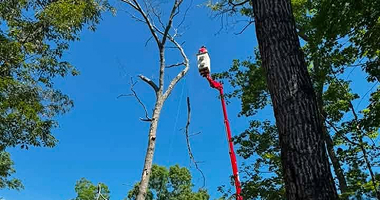
Dead branches, extensive limb loss, and a thinning canopy can indicate declining tree health or structural problems. These symptoms do not automatically mean a tree will fall, but they can add to concerns when the trunk is leaning or the roots appear damaged.
Look for large dead limbs, broken branches caught in the canopy, and significant damage on one side of the tree. A tree that has lost major limbs may also have an altered distribution of weight, which can affect how it responds to wind.
Avoid standing beneath damaged branches to inspect them. Large limbs can fall without much warning, particularly after storms have weakened their attachments.
6. The Tree Is Leaning Toward Your Home or Another Structure
A leaning tree near a house, garage, deck, driveway, or power line deserves careful attention because a failure could have serious consequences. The tree’s location does not automatically mean it must be removed, but it affects how the risk should be evaluated.
Consider what the tree could strike if it fell or lost a major limb. A tree over an occupied area presents a different level of concern from one standing in an open part of the property where a fall would be less likely to cause harm.
What Causes a Tree to Lean?
Trees can lean because of natural growth patterns, root damage, soil movement, or structural problems. Some trees develop a gradual lean as they grow toward available sunlight, while others begin leaning after strong winds or prolonged rainfall. Identifying the likely cause helps determine whether the tree can remain standing or needs further attention.
Common causes include:
- Natural growth: A tree may gradually lean toward sunlight or an open area as its canopy develops.
- Strong winds: Storms can push a tree out of position, damage roots, or break major branches.
- Heavy rainfall: Saturated soil may provide less support for roots, especially on sloped ground or where drainage is poor.
- Root disturbance: Excavation, construction, soil compaction, and erosion can damage the roots that help anchor a tree.
- Trunk damage or decay: Structural weaknesses may affect the tree’s ability to support its weight.
- Uneven canopy growth: Branches concentrated on one side can contribute to an unbalanced structure, although canopy shape alone does not establish that a tree is unsafe.
These factors can be particularly relevant on properties in Ellijay and throughout North Georgia, where sloped terrain and periods of heavy rain can complicate tree stability. A tree that begins leaning after a storm should be assessed based on its condition rather than the angle alone.
Can a Leaning Tree Be Saved?
Some leaning trees can remain in place, but others have sustained too much root or structural damage to recover safely. A gradual lean with no other signs of instability may be manageable, while a tree that has shifted suddenly or partially uprooted may need removal. The appropriate decision depends on the tree’s size, condition, root system, and surroundings.
A few situations may allow for preservation:
- A longstanding lean: If the tree has grown at an angle for years without signs of movement or structural damage, removal may not be necessary.
- A young tree with a slight lean: A recently planted tree may sometimes be corrected and supported if its roots remain sufficiently intact.
- A tree with limited, manageable defects: Appropriate pruning or other targeted care may address certain problems when the root system and trunk remain stable.
However, a mature tree that has shifted significantly or lost major roots is a different situation. Straightening a large tree does not automatically restore its root system, and staking or bracing cannot make every unstable tree safe.
We assess the tree’s condition before recommending a course of action. If the damage is too severe for the tree to remain safely in place, removal may be the most appropriate solution.
What Should You Do If Your Tree Suddenly Starts Leaning?
If a tree suddenly starts leaning, keep people away from the area and arrange a professional assessment. A new lean can indicate root failure, especially when accompanied by cracked soil, exposed roots, or a raised section of ground. Do not attempt to push the tree upright, cut damaged roots, or remove large branches yourself.
Follow these steps:
- Stay clear of the tree. Keep your distance from the trunk, exposed roots, and the area where the tree or its branches could fall.
- Keep others away. Prevent children, pets, and visitors from entering the potential fall zone.
- Observe from a safe location. Note when the lean appeared and whether you can see soil movement, broken branches, or trunk damage without approaching the tree.
- Arrange an assessment. Contact Explicit Land & Tree Service to discuss the tree’s condition and whether removal is necessary.
- Treat power-line involvement as an emergency. Never approach a tree touching or threatening electrical wires. Stay clear and contact the utility company or emergency services as appropriate.
If the tree is actively shifting, partially uprooted, or threatening an occupied structure, do not wait for additional warning signs. Move away from the danger area and seek appropriate assistance.
Should You Remove a Leaning Tree Before the Next Storm?
A leaning tree with signs of root damage or structural weakness should be assessed before another severe storm if possible. Additional wind and rain can place more stress on a tree that has already lost stability. Removing a hazardous tree before conditions worsen may help reduce the chance of damage to nearby structures and outdoor areas.
This is especially relevant on sloped properties in North Georgia, where heavy rainfall can affect soil conditions and access around a tree. A tree with a new lean, lifted roots, or significant trunk damage should not be left unassessed simply because it is still standing.
Not every leaning tree needs to be removed before storm season. The decision should reflect the tree’s condition, the likelihood and consequences of failure, and whether an appropriate preservation option exists.
How Do Professional Tree Care Experts Handle a Dangerous Leaning Tree?
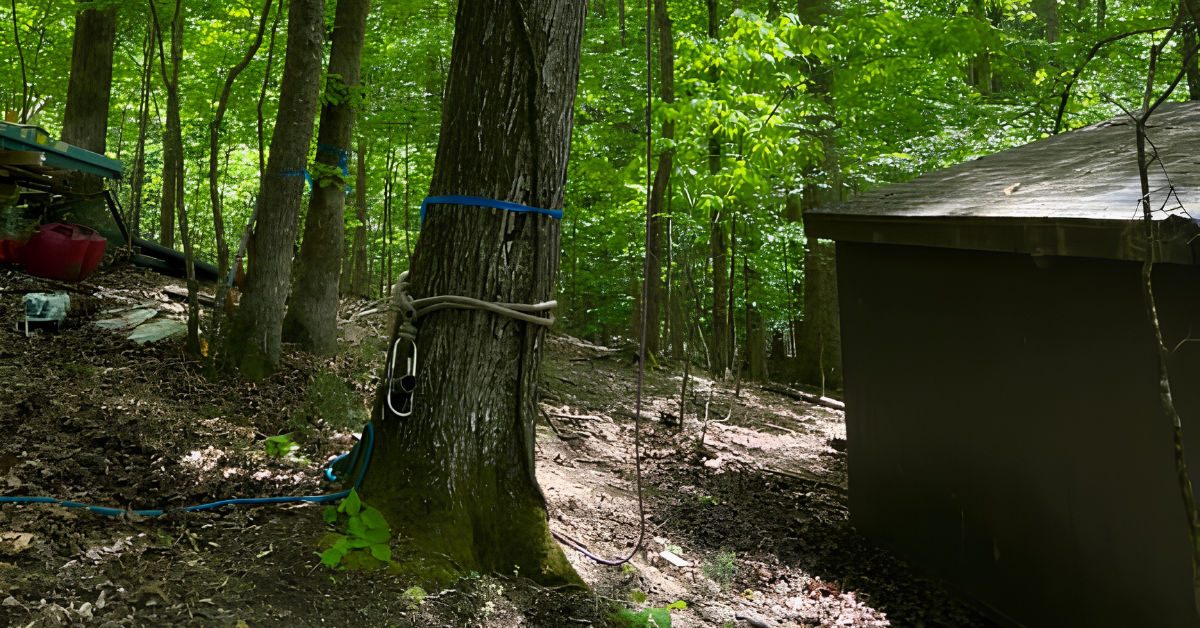
At Explicit Land & Tree Service, we evaluate the tree’s condition, its position on the property, and the nearby structures before determining whether removal is needed. Trees leaning toward homes, decks, driveways, and other structures require careful planning because the available working space and surrounding terrain affect how the job can be completed.
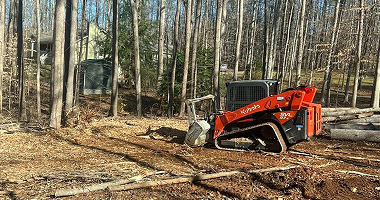
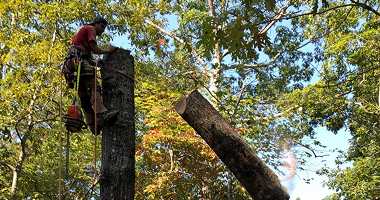
Our tree removal service covers hazardous trees and other situations where a tree needs to come down. We account for the conditions at the site, including access challenges and the need to protect surrounding property during the work.
For homeowners in Ellijay, Gilmer County, and nearby North Georgia communities, we can help determine the next step when a tree begins leaning or shows signs of storm damage.
If a tree on your property has shifted, developed visible cracks, or started pulling away from the ground, contact us at (706) 607-6171 or request a free estimate online.